




Why Your Knee Gives Out Even Without a Recent Injury
When a knee suddenly buckles, it can be unnerving, especially when there has been no recent twist, fall, or sports injury to blame. One moment you are stepping off a curb, getting out of a golf cart, or rising from your favorite chair, and the next your leg feels like it will not support you. That giving-way feeling is your body’s signal that something inside the joint, the surrounding muscles, or even your nerves needs attention.
At The Burress Medical Center in the Lady Lake and the The Villages area, we see many active adults with this exact concern. In this article, we will walk through the most common reasons knees give out without a new injury, how a chronic knee pain specialist in The Villages evaluates the problem, and what treatments, including regenerative knee injection therapy, may help you feel steadier, safer, and more confident on your feet.
When Your Knee Suddenly Buckles and What It Could Mean
A knee that suddenly gives out rarely comes out of nowhere. In many cases, the issue has been building slowly, with subtle wear and tear or weakness that finally reaches a tipping point. Even if there is no swelling, bruising, or obvious trauma, buckling can signal changes in the joint surfaces, ligaments, tendons, or the way your muscles and nerves are working together.
We want you to know that you are far from alone. Many people in our community love walking the neighborhoods, playing golf, or keeping up with grandkids, yet find themselves tensing up on steps or curbs because they do not fully trust their knees. A chronic knee pain specialist in The Villages can sort through these possible causes, identify what is really going on, and design a plan that fits your daily life.
Why Knees Give Out Without a New Injury
One of the biggest reasons for knee instability without a fresh injury is gradual degeneration inside the joint. Osteoarthritis slowly wears away the protective cartilage that lets the bones glide smoothly. As that cushion thins, the bones can rub, causing pain and irritation. When pain spikes suddenly, the muscles around the joint may briefly shut down as a protective reflex, making the knee feel as if it drops out from under you.
The meniscus, the rubbery shock absorber in the knee, can also fray or tear little by little. You might not feel a dramatic pop, but small tears can lead to catching, locking, and an uneasy sensation that the knee could buckle with a twist or step. These small changes often add up over time.
Ligaments and tendons play a major role as well. A partially healed ligament sprain from years ago can leave the knee slightly loose, even if you no longer remember the original incident. The ACL, PCL, MCL, and LCL work together to keep the joint steady. If one is stretched or weakened, that stability is compromised. Tendons, such as the patellar tendon at the front of the knee or the quadriceps tendon above the kneecap, can develop tendinitis or gradual degeneration. When these tissues are irritated or weakened, the knee may feel unreliable, especially when you first stand up or go down stairs.
Muscle strength and balance around the hip and thigh are another key piece of the puzzle. Weak quadriceps, hips, or glutes give you less control over how the knee tracks when you walk, sit, stand, or step off a curb. Age-related muscle loss, especially in people who spend more time sitting, can make this worse. In retirement communities where many activities are social but not always physically demanding, it is easy for strength to fade without realizing it until the knee starts to give out.
Hidden Knee Problems You Cannot See but Definitely Feel
Not every cause of a buckling knee is inside the joint itself. Nerve and balance issues can make the leg feel unsteady. Peripheral neuropathy, spinal changes, or a pinched nerve can interfere with the signals that tell your muscles when and how hard to contract. If those messages are garbled or delayed, the knee can wobble or give way. Inner ear or general balance disorders can also make it feel like your knee is the problem when the root cause lies elsewhere.
Inflammation around the knee can be surprisingly disruptive. Irritation of a bursa, which is a small fluid-filled sac that helps tissues glide, or chronic low-level inflammation from repetitive motions like golfing, walking long distances, or playing pickleball, may cause local pain and reflex muscle shut-off. The result can be a sudden feeling of instability even though there was no clear injury that day.
Weight and alignment are important factors as well. Extra body weight adds significant pressure across the knee joint with every step. Over time, that extra load can speed up cartilage wear, strain ligaments, and increase pain. Alignment issues, like knock-knees or bowlegs, focus stress on one side of the joint, which can lead to uneven wear and a tendency for the knee to give way in certain positions.
It can help to notice patterns, such as:
- Does your knee give out more on stairs than on flat ground?
- Does it happen after a long walk, or mostly when you first stand up?
- Is there clicking, locking, or catching along with the buckling?
- Does pain shoot through the knee just before it gives way?
These details are valuable clues when we evaluate knee instability.
How a Chronic Knee Pain Specialist in the Villages Evaluates Instability
A careful medical history is always the starting point. A chronic knee pain specialist in The Villages will ask when your knee tends to give out, what you are doing when it happens, and whether there is pain, swelling, popping, or locking. We also look for past injuries, surgeries, other joint problems, and health conditions that might affect nerves, balance, or healing.
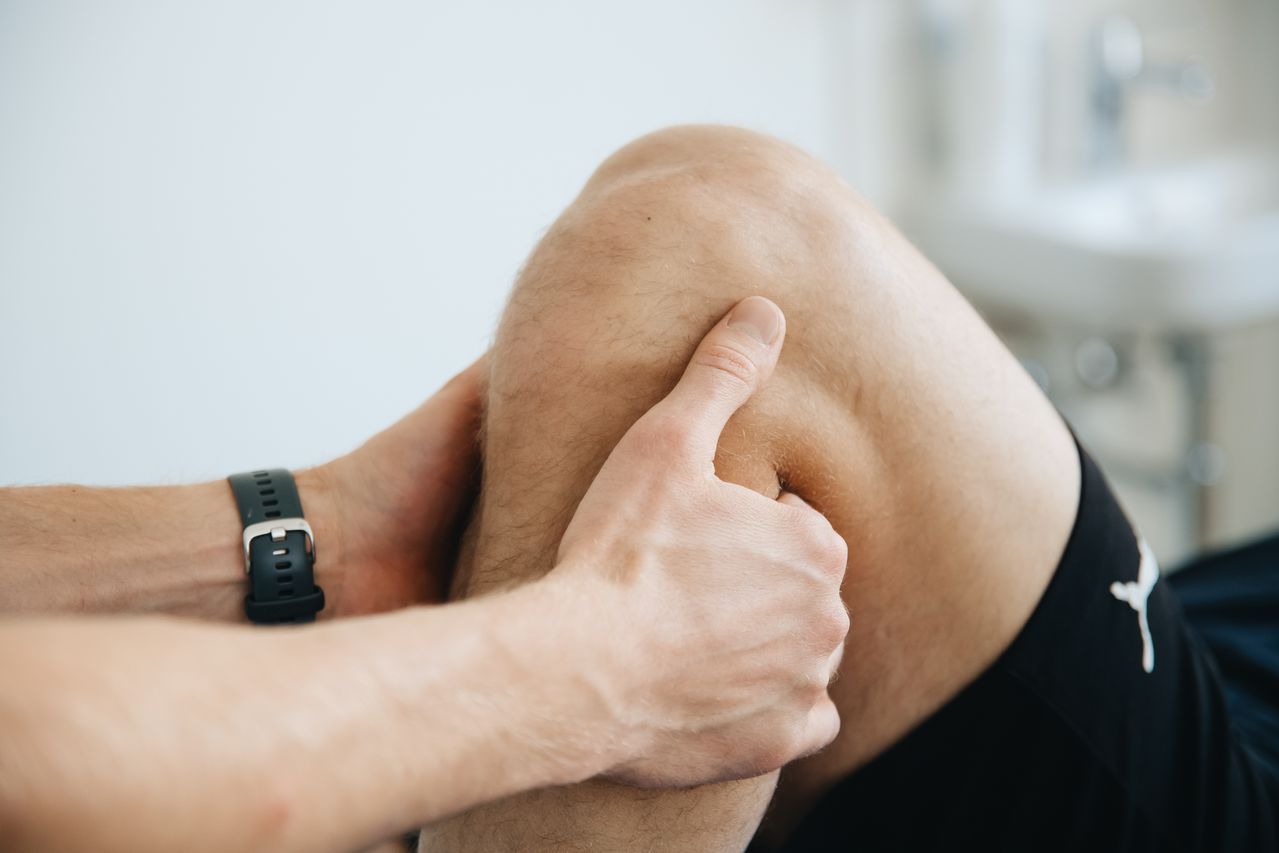
The physical exam includes guiding your leg through different motions, gently stressing specific ligaments, and checking how the kneecap tracks as you bend and straighten the knee. We assess range of motion, muscle strength, and tenderness around the joint line or tendons. Sometimes simple standing and walking tests reveal that the hip or ankle is influencing what you feel in the knee.
Imaging and diagnostic tests can provide a deeper view when needed. X-rays show the bones, joint space, and any signs of arthritis or bone spurs. Ultrasound can be helpful to look at certain soft tissues in real time, and MRI can show details of cartilage, the meniscus, ligaments, and tendons. These tools help confirm whether there are hidden tears, degeneration, or inflammation contributing to the instability.
We also pay close attention to how you move through daily life. Watching how you walk, climb steps, rise from a chair, or get into and out of a golf cart can be just as important as any scan. This functional perspective lets us tailor a plan that supports your mobility and independence in the activities that matter most to you.
Modern Treatment Options From Strength to Regenerative Care
Treatment usually starts with conservative care aimed at making the knee stronger, more stable, and less painful. Targeted physical therapy can focus on the quadriceps, hip, and glute muscles that support and control the knee. When these muscles are working well, the joint is less likely to wobble or give out on uneven ground or stairs.
Supportive tools can help as you build strength. Depending on the findings, this may include bracing to give the knee extra stability, as well as shoe inserts to improve alignment and reduce pressure on vulnerable areas of the joint. We often adjust activity routines so that you stay active but avoid specific motions or surfaces that aggravate the knee while it heals.
For many people, injections play a role in calming pain and supporting better function. Cortisone injections may reduce inflammation and help in certain situations, though their effect is generally temporary. Hyaluronic acid injections, sometimes called gel injections, aim to improve lubrication inside the knee. Each of these has a place, but both are mainly focused on symptom relief.
Regenerative knee injection therapy is a more modern option that is designed to support the body’s own repair processes instead of only masking symptoms. Although specific approaches vary, regenerative knee injection therapy generally involves using your own cells or concentrated growth factors to target areas of damage in the joint. The goal is to reduce inflammation, support healing of tissues like cartilage or tendons, and improve stability and comfort over time.
To determine whether regenerative knee injection therapy is appropriate, a specialist considers several factors:
- The condition of your joint on imaging, including cartilage and meniscus
- How much arthritis or degeneration is already present
- Your overall health and any other medical conditions
- Your activity goals, such as walking the neighborhood, golfing, or playing pickleball
This careful selection helps match the right therapy to the right person, with realistic expectations about what is possible.
Taking the Next Step When Your Knee Keeps Giving Out
A knee that buckles, even without intense pain, is sending an important warning. Ignoring that signal can increase your risk of falls, more serious injuries, and faster wear inside the joint. Paying attention early gives you a better chance to address the root cause with strength work, mechanical support, or medical treatments, including regenerative options when appropriate.
By tracking when your knee gives out, what it feels like, and what you were doing at the time, you give a chronic knee pain specialist valuable information to work with. That insight, combined with a thoughtful exam and the right diagnostic tools, can lead to a clear diagnosis and a personalized plan to help you stay steady, active, and confident as you move through everyday life in our community.
Discover a Personalized Path to Lasting Knee Relief
If knee pain is limiting your daily life, we are here at The Burress Medical Center to help you explore options that fit your specific needs and goals. Our team will carefully evaluate your condition and explain how regenerative knee injection therapy may support your body’s natural healing process. Schedule a visit with us so we can discuss your symptoms, review your history, and map out a targeted treatment plan tailored to you.